
Yard gullies are designed to collect rainwater from driveways, courtyards, pathways and other outdoor surfaces. However, when a gully becomes filled with silt, leaves or general debris, water can begin pooling around the property instead of draining away.
A blocked yard gully might seem like a minor problem, but repeated overflowing can make outdoor areas slippery, affect paving and contribute to localised flooding during heavy rainfall.
At Pure Drainage, we help homeowners, landlords and businesses across Southampton investigate and clear blocked outside drainage systems, including gullies, underground pipework and inspection chambers.
How Does a Yard Gully Work?
A yard gully is an outdoor drainage point that collects surface water and directs it into the wider drainage system.
Many gullies have a chamber beneath the grate where heavier material can settle before water passes through the outlet pipe.
Over time, this chamber can accumulate mud, grit, leaves and silt. If the material reaches the outlet or forms a substantial obstruction, water may stop draining properly.
Properties around Shirley, Bitterne, Woolston, Portswood and Freemantle may have different drainage arrangements depending on their age, previous extensions and landscaping alterations.
Why Do Yard Gullies Become Blocked?
1. Silt and Sediment Build-Up
One of the most common reasons a yard gully stops working is the gradual accumulation of silt.
Rainwater carries fine soil, grit and loose material across paved surfaces. When it enters the drainage chamber, heavier particles settle at the bottom.
As the deposits build up, they reduce the space available for water and can eventually obstruct the outlet.
This can be particularly problematic around commercial yards, driveways and outdoor areas regularly exposed to vehicle movement or disturbed ground.
2. Leaves and Organic Debris
During autumn and winter, leaves and garden debris can collect around gully grates.
Even when the grate appears relatively clear, smaller material may already have entered the chamber.
Leaves can also trap mud and other debris, forming a compact blockage that restricts drainage during rainfall.
3. Blocked Underground Outlet Pipes
Sometimes the gully chamber itself is clear, but water still refuses to drain.
This can indicate an obstruction further along the connecting pipework.
Where the problem is not visible from the surface, a professional CCTV drain survey can help identify whether the outlet is blocked, damaged or affected by another underground defect.
Signs Your Yard Gully Needs Cleaning
Blocked gullies often develop gradually rather than failing without warning.
Common signs include:
- Water sitting above the gully grate after rainfall
- Slow drainage from paved areas or courtyards
- Mud and silt collecting around the opening
- Repeated puddles in the same location
- Water overflowing during moderate rainfall
- Unpleasant smells from the drainage chamber
If clearing visible leaves does not improve drainage, the problem may be inside the chamber or connecting pipe.
How Are Blocked Yard Gullies Professionally Cleared?
The appropriate cleaning method depends on the location and type of blockage.
1. Removing Silt and Debris
The first step is usually to inspect the gully and identify how much material has accumulated.
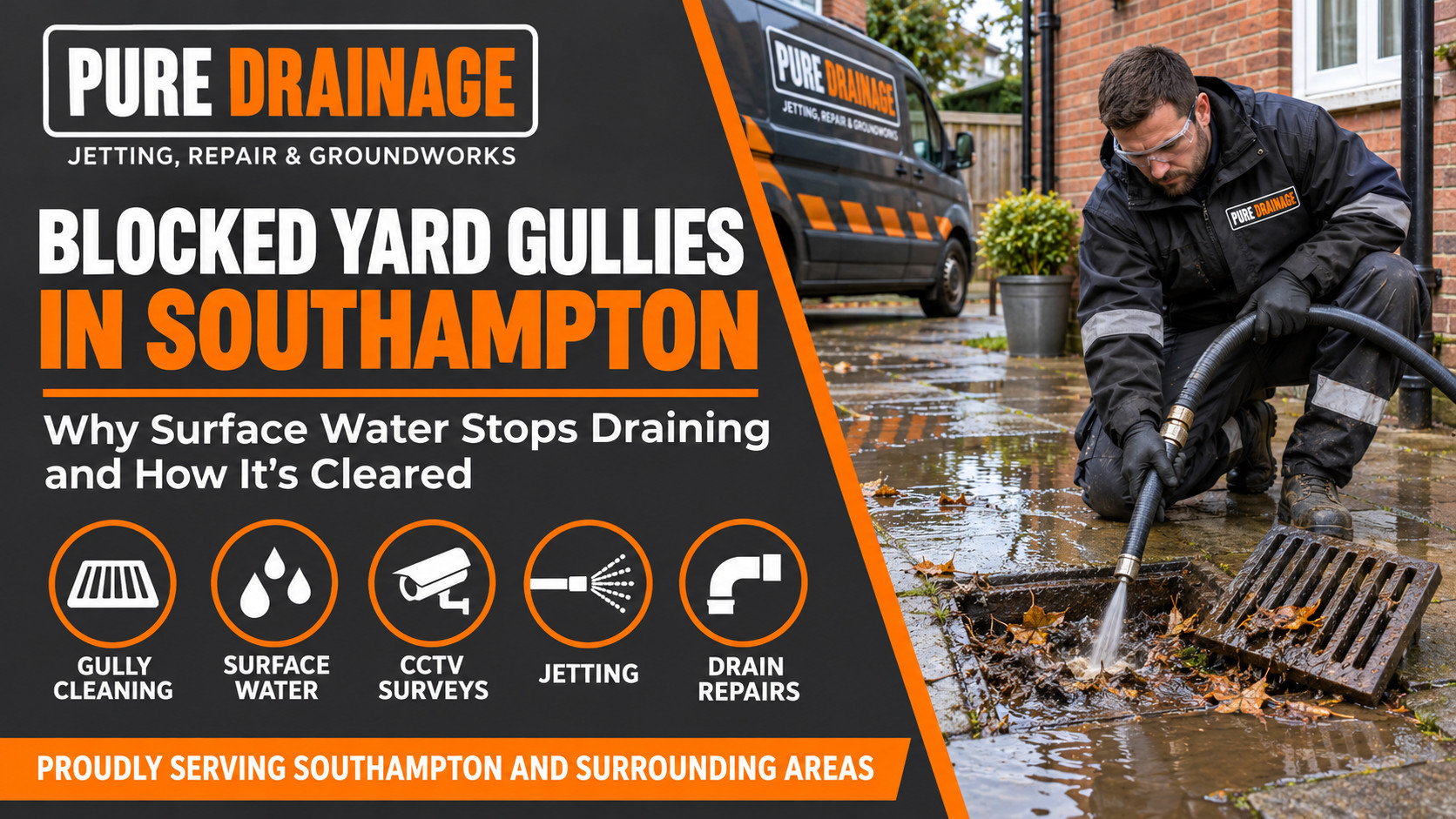
Loose debris and sediment can be removed from the chamber using suitable cleaning equipment. Where significant amounts of silt have collected, specialist suction equipment may be appropriate.
Clearing the accumulated material helps restore the gully’s ability to collect water and reduces the chance of debris entering the connecting drain.
2. High-Pressure Water Jetting
If the obstruction extends into the outlet pipe, professional drain jetting may be required.
High-pressure water can help break up and flush away accumulated silt, mud and other deposits, provided the pipework is suitable for jetting.
This is particularly useful when the gully has been cleared but water continues to back up.
3. Checking for Underground Damage
If the gully repeatedly blocks after cleaning, there may be a deeper issue.
Cracked pipework, displaced joints, root intrusion or a partial collapse can restrict flow and allow debris to collect.
In these cases, professional drain repairs may be necessary to prevent the problem returning.


Yard Gully Problems at Commercial Properties
Blocked gullies can create particular difficulties for businesses with large areas of paving or hardstanding.
Commercial premises around Millbrook, Nursling, Hedge End, Eastleigh and Southampton’s industrial areas may rely on gullies to drain service yards, loading bays, parking areas and building entrances.
When those drainage points become blocked, standing water can make access difficult and create slippery surfaces for pedestrians and vehicles.
Pure Drainage provides commercial drainage services to help businesses investigate blockages and maintain their drainage systems.
Who Is Responsible for Blocked Gullies in Southampton?
Responsibility depends on where the gully is located.
Gullies and drainage systems serving private yards, driveways and commercial premises are generally the property owner’s responsibility.
However, blocked gullies forming part of adopted highway drainage should normally be reported to the relevant highway authority.
For further guidance, GOV.UK explains how to report a blocked public drain.
If you’re unsure whether the problem is within your private drainage system, a professional inspection can help identify where the blockage is located.
How Can You Prevent Yard Gullies from Blocking Again?
Regular checks can help reduce the amount of debris entering outside drainage systems.
Keep leaves and loose material away from gully grates, avoid sweeping gravel or soil into drainage openings and monitor how quickly surface water disappears after rainfall.
For commercial premises or properties that regularly experience silt accumulation, planned cleaning can reduce the likelihood of unexpected blockages.
It’s also worth remembering that not every drainage problem is caused by debris. Poor surface levels, damaged underground pipes or inadequate drainage capacity may produce similar symptoms.
Need Help with Blocked Yard Gullies in Southampton?
If your yard gully is overflowing, surface water keeps collecting around your property or an outside drain has stopped clearing properly, identifying the cause early can help prevent further disruption.
Pure Drainage provides general drainage services, professional drain unblocking, jetting, CCTV inspections and drainage repairs across Southampton and nearby areas, including Totton, Hythe, Eastleigh, Hedge End and the New Forest.
Contact Pure Drainage today for professional help with blocked yard gullies and surface water drainage problems.
Do you need help from our experts?
Give us a call today to get expert advice and support from our experienced team.