An outside drain that blocks once may simply need clearing. When the same drain keeps backing up, overflowing or producing unpleasant smells, there is usually a reason behind it.
Repeated blockages can point to a build-up further along the pipe, damage below ground or a drainage system that is struggling to cope with the amount of water and waste entering it.
Pure Drainage helps homeowners, landlords and businesses across Southampton identify the cause of recurring outside drain problems and put the right solution in place.
What Does an Outside Drain Do?
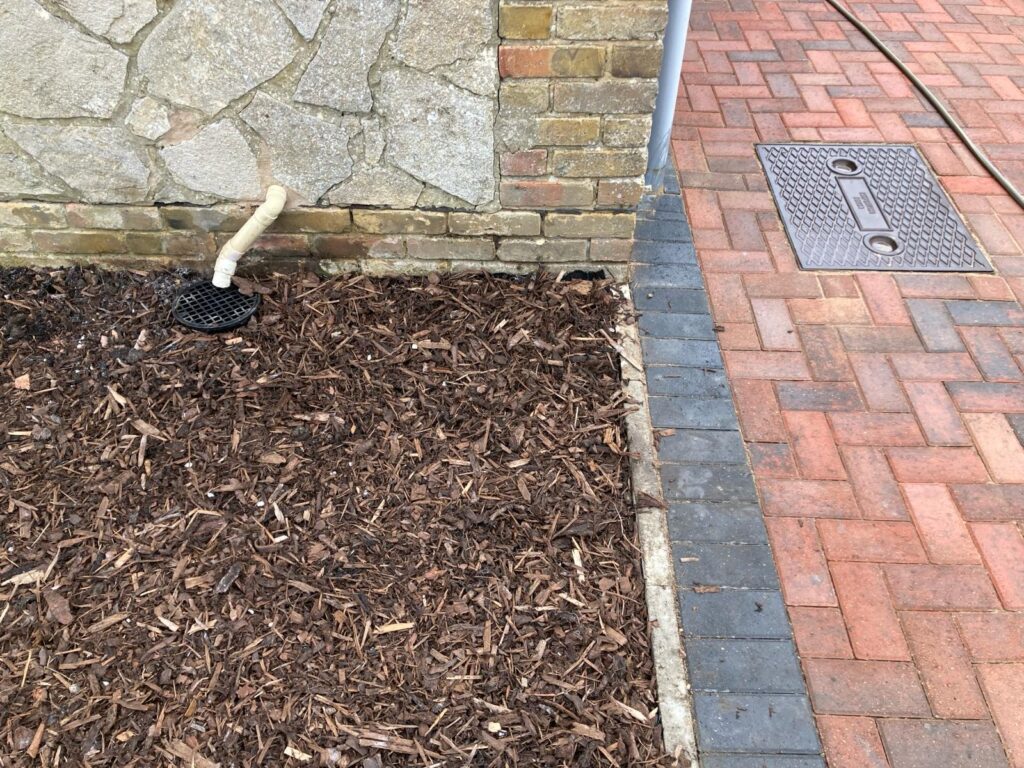
Outside drains collect water from different parts of a property. Depending on the drainage layout, they may receive rainwater from gutters, wastewater from kitchens or water running off patios, paths and driveways.
Because they are exposed to the weather, soil and surrounding vegetation, they can collect far more debris than indoor pipework.
Properties across Southampton vary considerably. Older terraces around Shirley, Freemantle and Portswood may have ageing or shared drainage arrangements, while homes in Bitterne, West End and surrounding areas can have longer external drainage runs affected by trees and garden ground.
Understanding where the drain leads is often the first step towards finding the cause of the problem.
Leaves, Soil and Silt
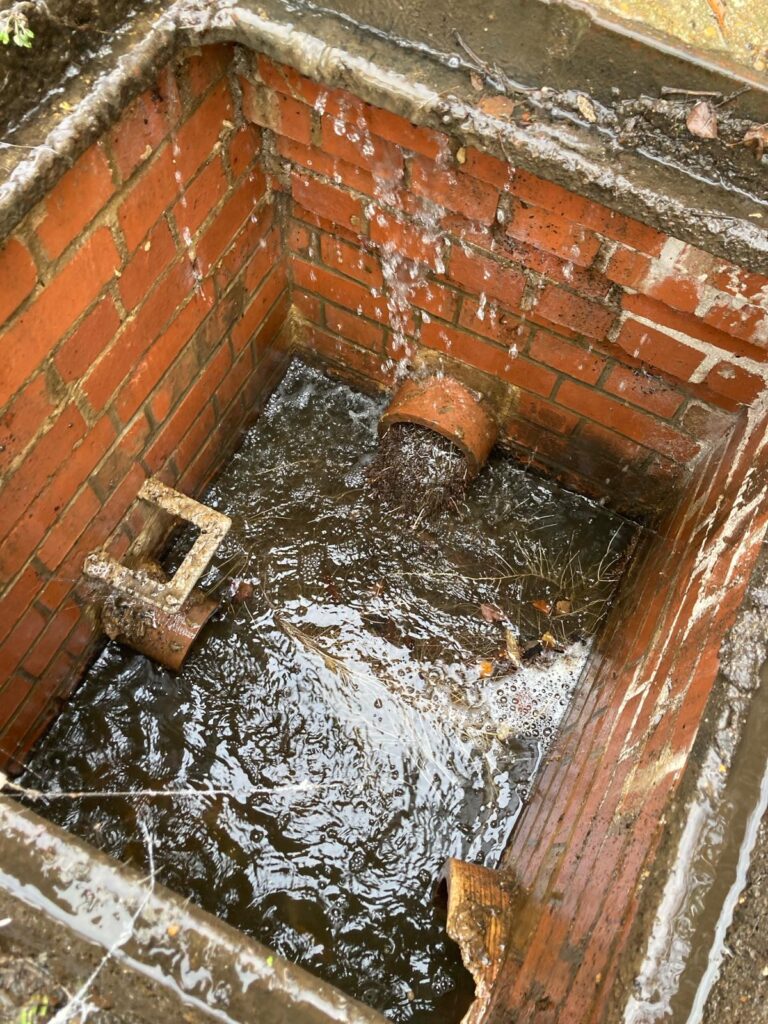
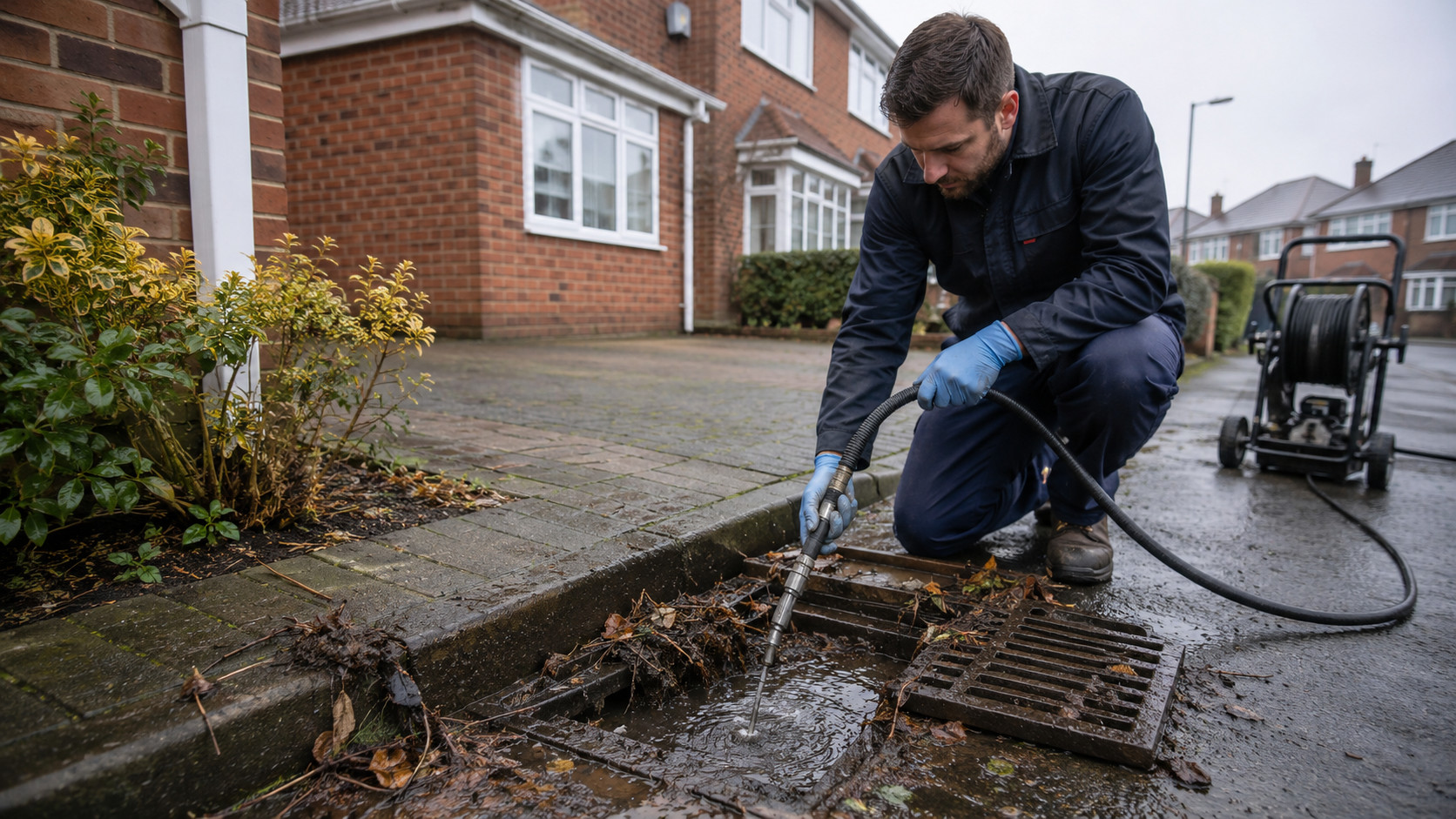
Open gullies and external drains naturally collect leaves, mud and general garden debris. During wet weather, this material can be washed deeper into the system, where it settles and begins restricting the flow.
Clearing debris from the top may provide temporary relief, but it will not remove silt that has already travelled into the underground pipework.
This is particularly common around gardens, car parks and tree-lined roads where organic material builds up throughout the year.
Fat and Food Waste from Kitchen Drains
Many outside gullies receive wastewater from kitchen sinks or appliances. Fat, cooking oil and food residue can gradually coat the inside of the pipe.
As the grease cools, it hardens and traps other waste passing through the drainage system. The available space inside the pipe becomes smaller until water begins draining slowly or backing up through the outside gully.
This type of blockage often returns when only the immediate obstruction has been removed. A more thorough clean may be required to clear the material coating the pipe.
Damaged or Displaced Pipework
A blockage is not always caused by loose waste. Underground pipes can crack, move out of position or develop poor joints over time.
Waste and toilet paper may catch on a damaged section, allowing a new blockage to form soon after the previous one has been cleared.
Possible warning signs include:
- The same drain blocking repeatedly
- Water escaping into the surrounding ground
- Damp or unusually soft areas nearby
- Unpleasant smells that remain after cleaning
- Problems affecting several drains at once
A CCTV drain survey can help establish whether the pipe itself is contributing to the issue.
Tree Root Intrusion
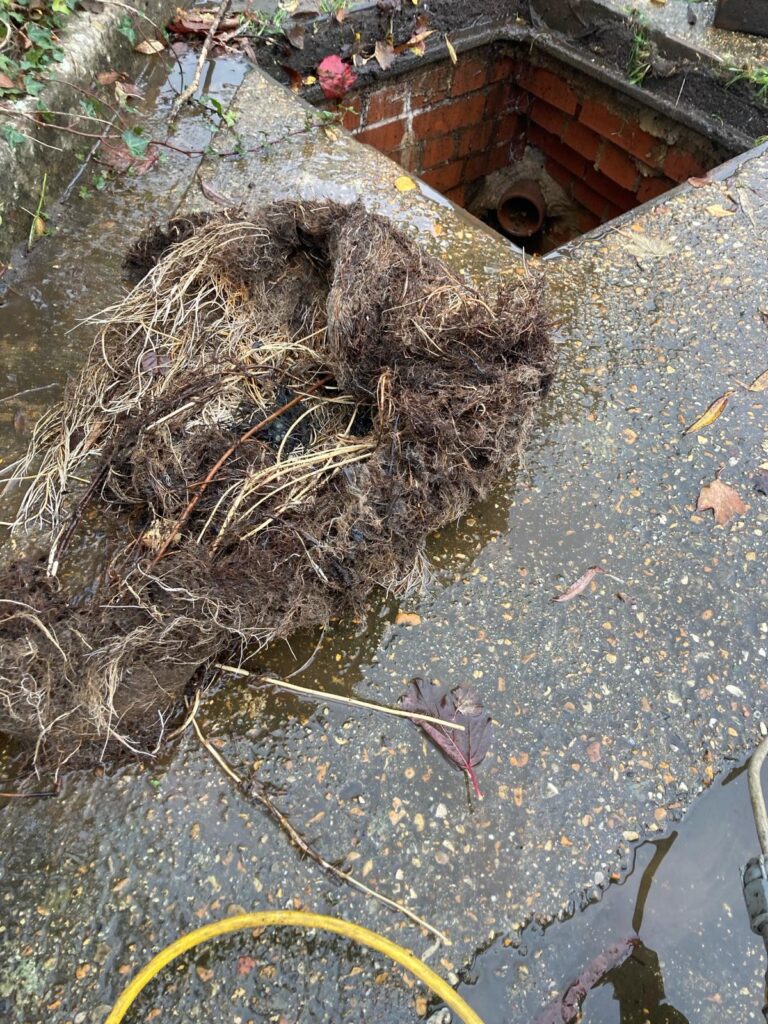
Tree roots are attracted to moisture and can enter through small cracks or loose joints in underground drains.
Once inside, the roots continue growing and create a dense obstruction that catches waste. Clearing the blockage without addressing the damaged pipe can allow the roots to return.
Root-related problems are more likely where drains run beneath gardens, planted areas or established trees.
Shared Drainage Problems
Some Southampton properties, particularly older terraces and converted buildings, may share sections of drainage with neighbouring homes.
A blockage further along the shared run can cause water to back up at another property, even when that homeowner has done nothing wrong.
This can make the location of the problem harder to identify. Drain tracing and CCTV inspection can help determine how the system is connected and where the obstruction is sitting.
Why Does the Drain Overflow When It Rains?
An outside drain that only overflows during heavy rain may be struggling with surface water rather than household waste.
The cause could include:
- A blocked rainwater pipe
- A gully filled with silt
- A damaged surface water drain
- A failing or saturated soakaway
- Too much hard landscaping directing water towards one outlet
Homes with paved gardens, extensions or large driveways may produce more runoff than the original drainage arrangement was designed to manage.
This can also affect commercial sites around Southampton, Totton, Hythe and Eastleigh, where car parks and large roof areas generate significant volumes of surface water.
How Recurring Outside Drain Blockages Are Fixed
The correct solution depends on what is causing the problem.
A professional drainage engineer may begin by clearing the immediate obstruction and checking whether normal flow has returned. High-pressure water jetting can then remove grease, silt and residue from the inside of the pipe rather than simply creating a small opening through the blockage.
Where the problem keeps returning, a CCTV survey can reveal cracks, displaced joints, roots or collapsed sections. Repairs may involve localised patching, pipe lining, excavation or replacement of the damaged area.
Blocked gullies and soakaways may also require silt removal or vacuum tanker support where larger volumes of material have collected.
Can You Prevent an Outside Drain from Blocking?
A few simple habits can reduce the risk of future problems.
Keep leaves and loose debris away from external gullies, check that drain covers are secure and avoid pouring cooking fat or food waste down kitchen sinks. Gutters and downpipes should also be kept clear so rainwater can reach the drainage system without carrying excessive debris.
Where a property has suffered repeated issues, preventative cleaning can be more cost-effective than waiting for another overflow.
Outside Drain Blocked in Southampton?
When an outside drain keeps blocking, repeatedly clearing the visible waste is unlikely to provide a lasting answer.
Pure Drainage provides drain unblocking, jetting, CCTV surveys and drainage repairs across Southampton and the surrounding area. Our team can identify why the problem is returning and recommend a practical solution based on the condition of the system.
Contact Pure Drainage to arrange an inspection or get help with an overflowing outside drain.
Do you need help from our experts?
Give us a call today to get expert advice and support from our experienced team.