A bad smell coming from your drains is never something you want to ignore. It might start as a mild odour near the kitchen sink, an outside gully or a bathroom drain, but it can often point to a deeper issue within the drainage system.
For homes, rental properties and businesses across Southampton, drain smells can be caused by anything from trapped food waste to damaged underground pipework. The sooner the source is found, the easier it usually is to resolve.
At Pure Drainage, we help customers across Southampton and surrounding areas identify the cause of unpleasant drain smells and put practical solutions in place.
Why Do Drains Start to Smell?
Drains are designed to move wastewater safely away from a property. When everything is working properly, smells should not be coming back into the building or lingering around outside drains.
Odours usually appear when waste is trapped, water is not flowing correctly, or there is a fault allowing gases or smells to escape.
This can happen in domestic homes, commercial kitchens, schools, rental properties, offices and older buildings where the drainage system may have been changed or repaired over time.
Common Causes of Bad Drain Smells
There are several reasons drains can begin to smell. Some are simple blockages, while others need a professional inspection.
Food Waste and Grease Build-Up
Kitchen drains are one of the most common sources of bad smells.
Food residue, fat, oil and grease can stick to the inside of pipework. Over time, this build-up starts to trap waste and bacteria, creating an unpleasant smell that becomes more noticeable after using the sink or dishwasher.
This is especially common in busy households, cafés, takeaways and restaurants around areas such as Southampton city centre, Portswood, Shirley and Ocean Village.
Blocked Outside Drains and Gullies
Outside drains can collect leaves, mud, silt and general debris. When this material sits in the drain for too long, it can begin to smell, especially during warmer or wetter weather.
Properties near gardens, trees, car parks and high-footfall areas are more likely to experience this issue.
If the drain is also slow to clear or overflowing, the smell may be a sign of a developing blockage further down the system.
Dry Traps
Drain traps are designed to hold a small amount of water, which helps stop smells travelling back up through the pipework.
If a sink, shower, floor drain or toilet has not been used for a while, the water in the trap can dry out. This can allow unpleasant smells to enter the property.
This is more common in spare bathrooms, vacant rental properties, holiday lets, commercial units or areas of a building that are not used every day.
Damaged or Cracked Pipework
If underground pipework is cracked, displaced or damaged, waste can escape into the surrounding ground. This can lead to persistent smells outside, damp patches, recurring blockages or pest issues.
Older properties across Southampton, including areas such as Bitterne, Woolston, Freemantle and Highfield, can sometimes have ageing drainage systems that are more vulnerable to wear, movement and historic repair issues.
Poor Ventilation
Drainage systems need proper ventilation to allow air and gases to move safely through the system. If ventilation is blocked or not working correctly, smells can be forced back into the property.
This can sometimes be noticed as gurgling sounds, slow drainage or smells that appear after toilets, sinks or appliances are used.
When Should You Be Concerned?
A one-off smell may not always be serious, but recurring odours should be checked.
You should arrange a professional inspection if you notice bad smells that keep returning, slow drainage, gurgling noises, water backing up, outside drains overflowing or damp patches near drainage areas.
For commercial properties, restaurants, schools and managed buildings, drain smells should be dealt with quickly because they can affect hygiene, staff comfort and customer confidence.
How Drain Smells Are Investigated
The right approach depends on where the smell is coming from.
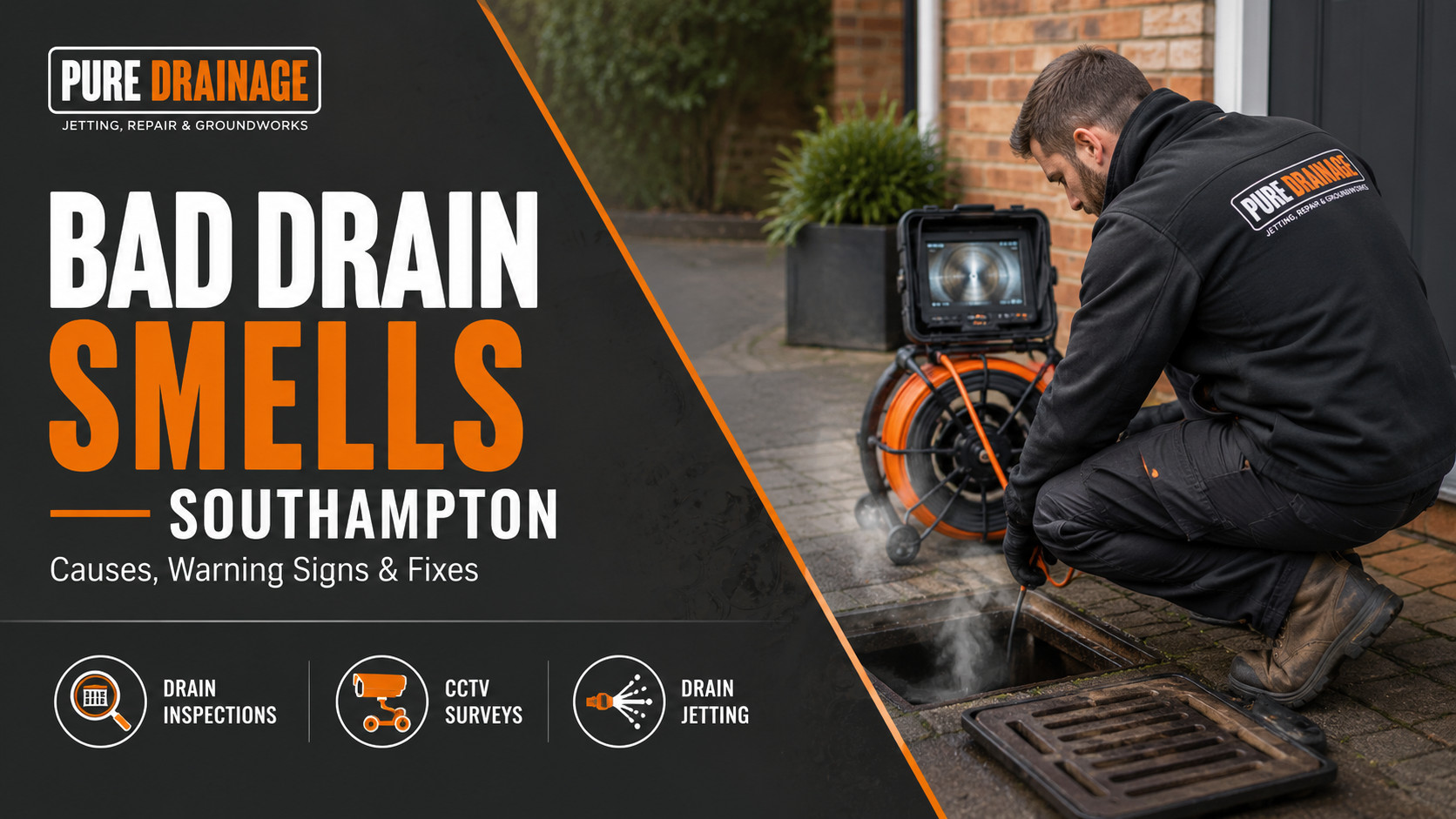
A drainage engineer may inspect internal waste pipes, check outside gullies, clear visible blockages and test whether water is flowing correctly. If the cause is not obvious, a CCTV drain survey can be used to inspect the underground pipework.
This helps identify issues such as grease build-up, root ingress, cracked pipes, displaced joints, collapsed sections or hidden blockages.
High-pressure water jetting may be used to clean the pipework thoroughly and remove the material causing the smell. If damage is found, repair work may be needed to stop the problem returning.
Preventing Bad Drain Smells
A few simple habits can help reduce the risk of drain smells.
Avoid pouring fat, oil or grease down kitchen sinks. Scrape food waste into the bin before washing up. Keep outside gullies clear of leaves and debris. Run water through rarely used sinks, showers and floor drains from time to time.
For businesses and managed properties, planned drain cleaning and inspections can help prevent odours before they become a bigger issue.
Need Help with Bad Drain Smells in Southampton?
If you have a bad smell coming from your drains, it is always best to find the cause rather than masking it with cleaning products or air fresheners.
Pure Drainage provides drain unblocking, CCTV drain surveys, jetting, repairs and maintenance across Southampton and nearby areas including Totton, Hythe, Eastleigh, Hedge End and the New Forest.
Contact Pure Drainage to arrange a professional drainage inspection and get the problem sorted properly.
Do you need help from our experts?
Give us a call today to get expert advice and support from our experienced team.